Florida, United States – Real life these days feels stranger than fiction and the lines between truth and fiction have become blurred, thanks to an obsession with extremism, social media and bias media. Daily life seems to be shaped by whichever narrative has sunk in deepest. This is where we are in the United States at this moment in time. A time of political unrest, upheaval, division, chaos in marginalized communities and uncertainty about our future, in general.
Truth is truth, but as we are living during a time where truth and facts are being redefined and turned upside down and inside out, we have to differentiate between truth and facts. Facts are objective pieces of information that can be verified, like data, scientific evidence, or reality-based observations.
Truth, however, can be broader and more subjective; it often includes personal perspective, beliefs, and experiences. Someone’s “truth” may reflect how they interpret or feel about reality, which can differ from factual accuracy. And it most certainly feels like many people are imposing their own versions of truth on reality. Which can get awfully confusing when you believe that we do create our own reality, or we at least shape it.
The important thing to remember is that regardless of the reality you may want to live in, facts matter because honesty builds trust and trust shapes our future. Standing up to tell the ‘truth’ (about facts) feels like an act of courage these days. The issue is when people try to tell their own version of truth, not the facts.
For argument’s sake, the reference used in this article about “speaking the truth” refers to speaking about facts.
As we focus on the truth/facts, it is important to bring up integrity. “Integrity is being honest, sincere, and consistently adhering to strong moral and ethical principles, even when it’s difficult or no one is watching.” We have politicians and people who choose to ignore facts and lack integrity. We desperately need leaders who have integrity and can navigate the political arena without losing their moral compass, especially at a time when it matters more than ever. American citizens (and people in general) are more likely to support leaders who have integrity and are seen as honest and transparent.
It has becoming increasingly more difficult to turn away from the political narratives and chaos being created day in a day out, especially on the news and social media platforms. For example, when someone who watches Fox, NewsMax or OANN daily hears “border invasion” on repeat, and “immigration crisis,” it feels like a given fact, not a contested claim.
On the flip side, someone scrolling CNN, MSNBC or progressive TikTok hears, “democracy is under attack” and then that concept is ingrained into their sense of urgency.
Neither side pauses to think, is this accurate and who taught me this is normal? We need to ask why we value one media news outlet as the only truth, when now-a-days, most news networks are more entertainment than anything and only focused on ratings, not reporting the facts, only their interpretation of it, based on partisanship.
This partisan way of living affects real life in all kinds of ways. For example, parents might show up at school board meetings furious about “indoctrination,” without ever questioning how they got that language in the first place. Meanwhile, other parents assume inclusive lessons are just obvious and the way things should be (from their perspective.) Both are operating inside pre-shaped “common sense,” based on what they believe is “right” or on how their views were shaped.
Today in the United States (2025,) the memes, the jokes, and the soundbites people share aren’t neutral. They reinforce a worldview that is warped by the constant bombardment of partisan points of view. A “dark Brandon” meme or a “woke mind virus” rant isn’t just entertainment; it’s training people on what to find normal or absurd. This is why it is so important to learn to navigate truth and not live in fear, based on today’s political climate. Although, admittedly, it has become increasingly more difficult to ignore everything that is going on.
There is a tug-of-war between the idea that America (U.S.A.) is fundamentally a democracy worth protecting versus the narrative that elections are rigged or illegitimate. That clash isn’t just about ballots; it’s about what story the American people believe.
What if, maybe, we tried to step outside the narratives we are bombarded with, which kinda’ feels a bit like when you realize a background noise has been humming the whole time. You don’t even notice it until the moment you do, and then you can’t un-hear it.
If collectively people broke through all the noise in 2025, it might look like this:
Instead of automatically accepting blanket statements like, “healthcare is tied to your job” or “college debt is normal,” people might ask: Who benefits from me believing that? Suddenly it’s clear: the insurance companies, lenders, the banks etc… not necessarily them.
And instead of reacting to book bans or rainbow flags as inherently good or bad, people might see the fight itself as the point. Meaning, politicians gain power by keeping us locked in endless outrage, because seriously, how is a rainbow affecting your day-to-day life? And why ban books because some people don’t like the contents? What are people a really afraid of? Is it that their ideologies are under attack? Is it personal insecurities? Religion? Need for control? The reasons are endless, but it all boils down to fear.
What we need to learn to do is to respect our differences and recognize that perceptions are shaped by personal experiences and that sometimes, dialogue is more about understanding than changing minds. We MUST learn to listen to each other, not just talk to defend or ready to pounce on the other person’s perspective. Ultimately, promoting open-mindedness and empathy creates space for constructive conversations, even when opinions differ. The key is to be willing to even engage in those types of conversations.
Sometimes it helps to pause, zoom out and take a step back from different political viewpoints. For instance, when you do, you start to see that both the ‘election denial’ crowd and the ‘democracy under attack’ crowd are running on fear. Sure, one has more facts behind it, but the common thread is the same: fear, which is the lever being pulled to move people in the direction that is convenient for those in power.
Fear is exhausting. The constant “Breaking News” banners, on tv and online, the daily “gloom and doom” narrative. It’s like living in a never-ending emergency drill. But here’s the thing: while we can’t flip a switch and change the headlines, we can change how we respond to them.
Perspective is our power. When we catch ourselves spiraling in the fear cycle, we can instead choose to focus on possibility, solutions, or even just gratitude for what’s steady in our own lives, we shift the energy we’re putting out into the world. That matters. The collective mood isn’t some abstract idea. It is built from millions of small, personal frequencies stacking on top of each other. That is the collective consciousness!
If enough people stop feeding fear and start feeding clarity, compassion, and hope, the tone of our politics and culture has to shift. Leaders will rise to meet the energy we project. Media outlets follow the attention we give. Communities reflect the conversations we’re having. We the people, have the power with our pockets, our voices and our frequency…our energy, our responses.
Changing your perspective isn’t just a self-care move; it helps to shift the political spectrum (as much as it can be changed.) It’s how we change the channel on the collective frequency from constant panic to forward momentum. Some people call it “positive thinking,” but it goes way beyond that. Positive thinking is a vital part of personal growth, but when we shift the collective consciousness, we transform societal narratives of how we see ourselves and each other. So that positive change is rooted in shared awareness, that ultimately influences how communities (and nations too,) operate.
To put it into perspective, positive thinking is like when we plant a single tree and take care of it to make sure it grows healthy and strong, but when we change the collective consciousness, it’s like we planted a whole forest. When enough trees grow and thrive together, the entire landscape transforms.
When we steer away from fear, change our perspective and change our thinking, we create personal change, but collective awareness is about creating an entire environment shift that benefits everyone.
Fear undoubtedly sells, so media outlets double down on alarm bells. People end up living in a constant state of “next crisis incoming,” which shapes what they talk about, what they buy, even how they raise their kids. I mean aren’t you tired already of hearing and seeing ‘Breaking News” every single day?! Every day feels like gloom and doom.
When fear is the baseline for every news story, every conversation, especially in politics, every election feels like ‘do-or-die.’ People vote less on policy they like, and more on who they think will stop the “worst-case scenario.” That keeps polarization alive. This is why we are facing the issues we are facing today in American politics 2025.
Instead of absorbing the concept of what “real America is supposed to look like, people could try to recognize that the United States has always been messy, and not always this “great” fictional utopia. There’s no single default of greatness. There never was. And no ONE person is coming in to save us. WE are the ones we have been waiting for.
When we each commit to growing and bettering ourselves and let go of fear and predispositions towards each other, we can collectively elevate the whole, and in this way, create a ripple of positive change that transforms our communities and the world.
What we radiate is what we receive. We have to change our frequency, collectively.
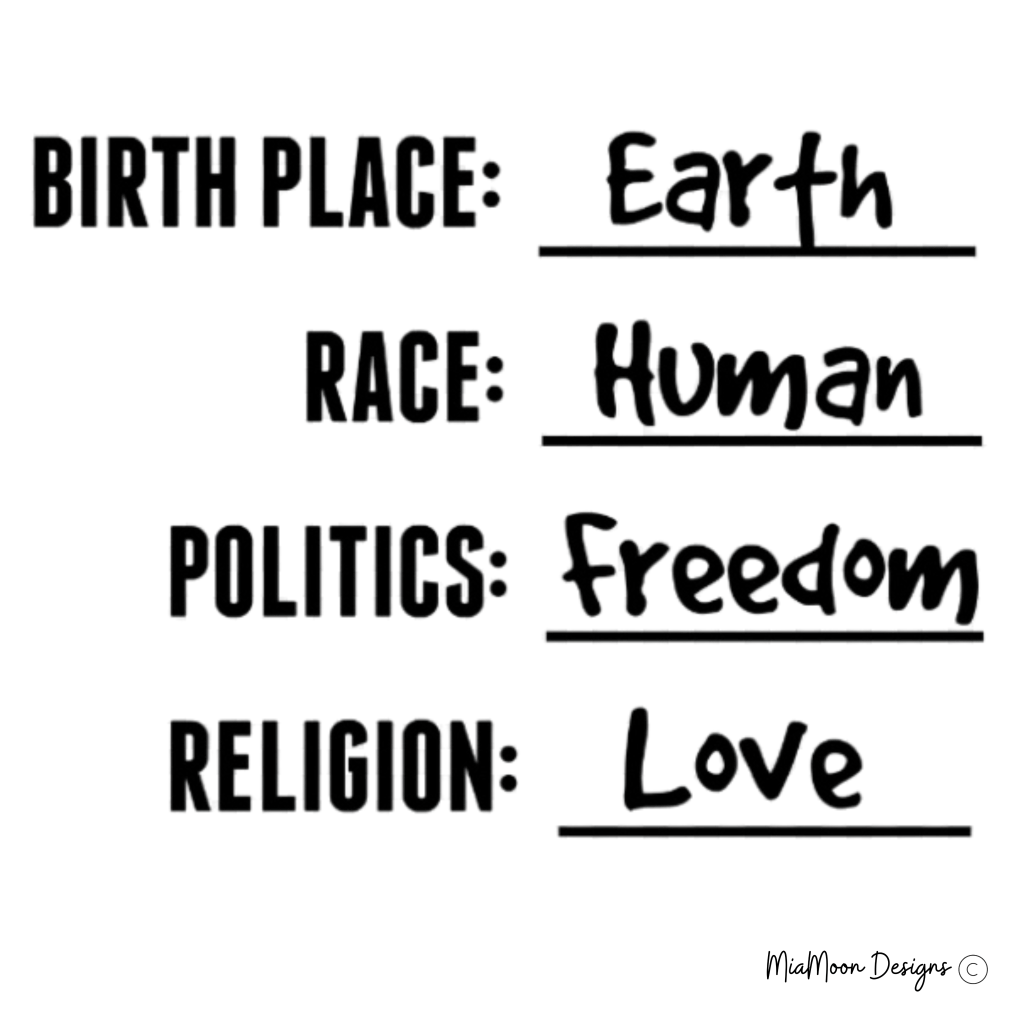
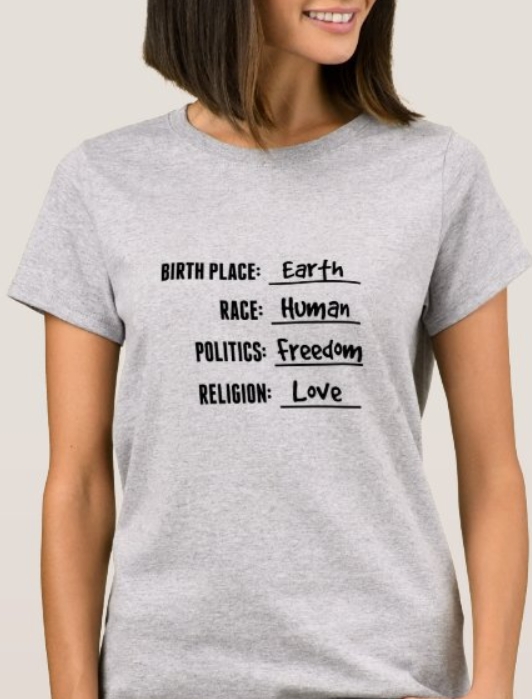
At our deepest level, we all share a fundamental desire for peace, love, health and freedom, how we get there is what seems to be up for debate. While our paths and opinions may differ, our hopes for a better life and a better world are more similar than they seem. Sometimes, the key is recognizing that beneath our divisions lies a common human longing and finding ways to work toward those shared dreams, together.
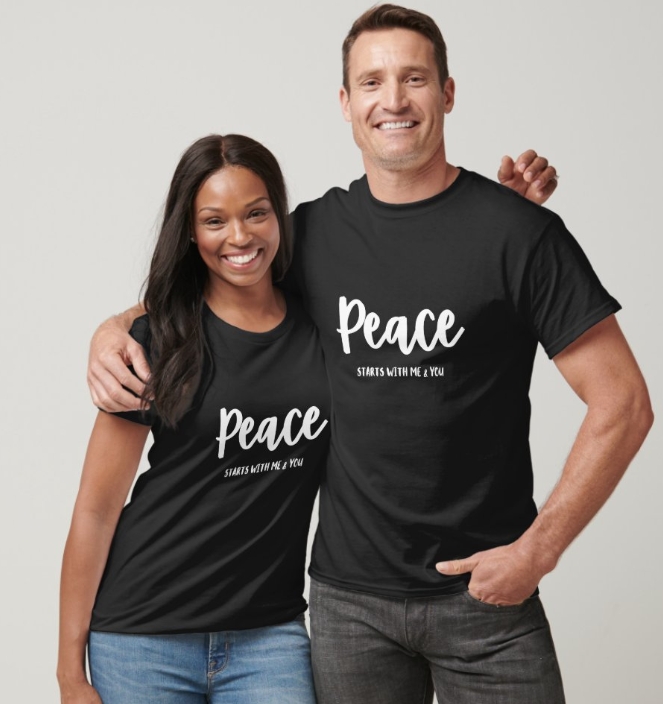
Afterall, peace starts with me & you. Politics aside, we are all from this Earth and should work to find common ground. Remember, we always have the power to choose where we stand and what we believe, and how we navigate truth in this complicated journey we are living.
We have the power within ourselves to endure all the ups and downs, we are faced with, whether that is in love, life or politics. It is the perspective we choose and how we navigate our responses and reactions that matters.








 The POWER to be HAPPY 😎