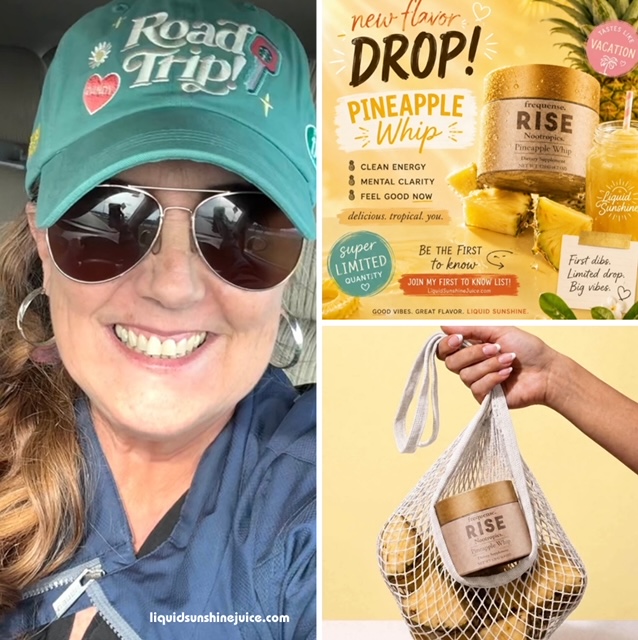
Take a little road trip with me to meet the limited-edition Pineapple Whip RISE, aka “Liquid Sunshine Juice,” a tropical nootropic drink designed to support mental clarity, creativity, energy, focus and brain health.
Learn all about why it’s worth the hype and how it can make you “feel good now.”
A little tropical sunshine for your brain, your energy…and your day. There are some days when you wake up ready to conquer the world. And then there are those other days.You know the ones.
Your brain has approximately 37 tabs open. You walk into a room and forget why you went there. Your energy is somewhere between meh and please don’t ask me to do anything, and another cup of coffee doesn’t necessarily sound like the answer.
That is exactly why I fell in love with RISE or, as I affectionately call it, Liquid Sunshine Juice. ☀️And now my sunshine just got a little more tropical.
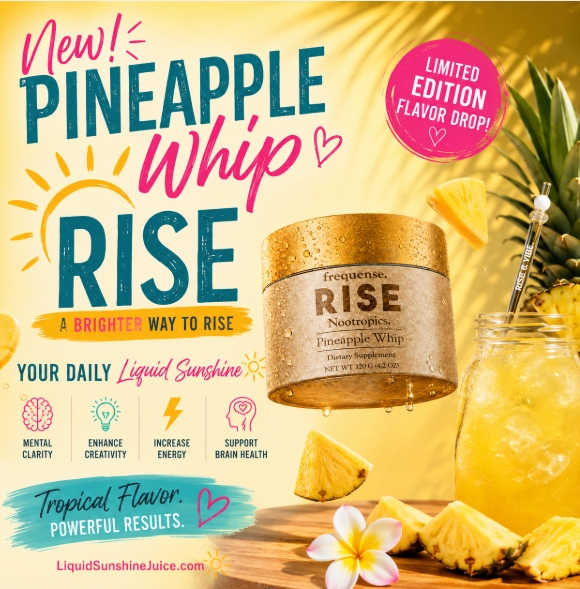
Say hello to the limited-edition Pineapple Whip RISE. 🍍🌴
Frequense describes the new flavor as “a brighter way to RISE.” The same RISE formula, now with a fresh, creamy pineapple twist. And seriously…could there be a more appropriate flavor for something I already call Liquid Sunshine? I think not. 😂
☀️ So…What Exactly is RISE?
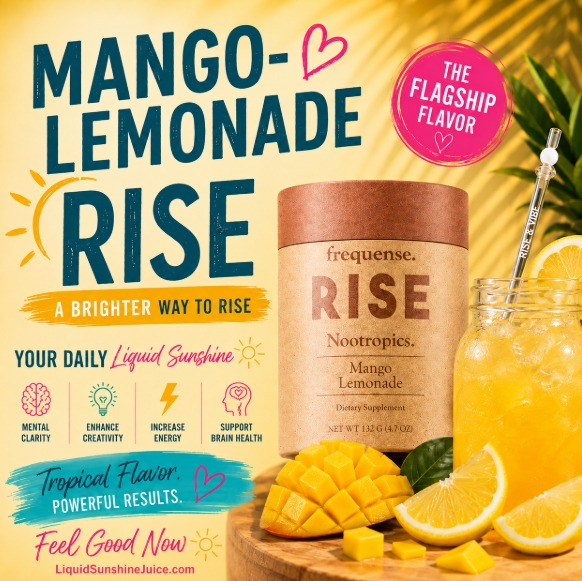
RISE is a nootropic drink formulated to support cognitive function, mental clarity, energy, creativity and overall brain health. The regular RISE formula combines seven organic mushrooms, B vitamins, amino acids, nootropics and 100 mg of caffeine from organic green coffee bean extract.
Basically, I don’t think of it as another traditional energy drink. I think of it as something I can reach for when I want to feel a little more awake, clear, focused and ready for my day. It not only taste good and literally makes you “feel good now.” It is clean energy that literally feels like Sunshine Juice!
🍍 Four Reasons I Call it Liquid Sunshine Juice
🧠 1. Mental Clarity
One of the biggest reasons people reach for RISE is its focus on mental clarity and concentration. RISE is formulated with nootropics and mushrooms designed to support cognitive performance and brain health., because sometimes we don’t necessarily need more hustle. We need enough clarity to figure out what actually deserves our energy.
🎨 2. Creativity
This one especially speaks to me. Whether you’re creating content, running a business, writing, solving problems, parenting, planning your next chapter or simply trying to think outside the box, creativity requires mental bandwidth.
RISE is specifically positioned to support creativity and problem-solving, which is one reason I’ve always loved the idea of this being more than simply an “energy” drink.
It’s brain fuel for people with things to do and ideas to bring into the world.
⚡ 3. Energy Without Another Ordinary Cup of Coffee
Sometimes you don’t want coffee. You want something cold, refreshing, fruity and FUN.
The caffeinated RISE formula contains approximately 100 mg of caffeine from organic green coffee bean extract, giving you another option when you’re looking for an energy boost. Add ice, sunshine and Pineapple Whip flavor and suddenly your morning feels considerably less boring. 🍍😎
🧠 4. Supporting Your Brain Matters
We talk constantly about taking care of our bodies. But what about our brains?
Your brain is involved in practically everything you do. Your concentration, creativity, memory, decision-making, motivation and how you navigate your day. As a brain tumor survivor myself, taking care of my brain health is vital. I love that it helps with mental clarity and lifts the brain fog and that “squirrel brain” feeliing we sometimes get when we try to do too many things at the same time.
RISE was created as a nootropic blend intended to support cognitive function, mental clarity and overall brain health. And I love the idea of making brain health part of our everyday wellness conversation.
🌴 Why Pineapple Whip?
Wellness does not have to taste like punishment. There. I said it. 😂Usually when something is good for you, it does not always taste good. That is not the case with the Rise drink, especially the most recent limited edition flavor.
The new Pineapple Whip takes the RISE experience and gives it a creamy, tropical pineapple twist. Basically sunshine-and-vacation vibes in your cup. Frequense describes it as its familiar RISE experience with “a fresh, creamy pineapple twist.”
And there’s another important piece: It’s a limited Flavor Drop.
Frequense’s Flavor Drops aren’t permanent additions to the lineup. They’re released as limited-time, small-batch offerings, and previous flavors have disappeared FAST. Peach Ring RISE reportedly sold out in just 2 hours and 25 minutes earlier this summer.
So this isn’t fake internet urgency.
When Pineapple Whip is gone, it may actually be gone.
☀️ But Here’s What “Feel Good Now” Really Means to Me
This is the part that’s bigger than a drink. I don’t believe feeling good means pretending everything in your life is perfect.
Sometimes life is messy. Sometimes we’re tired. Sometimes we’re overwhelmed. Sometimes our energy is off and our minds feel foggy. And sometimes the smallest choices can help shift the direction of our day.
- Drink the water.
- Take the walk.
- Turn on the music.
- Get outside.
- Call a friend.
- Eat something nourishing.
- Put your phone down.
- Watch the sunset.
And maybe pour yourself a ridiculously cheerful pineapple drink. 🍍☀️
Because feeling good isn’t always something that magically happens to us.
Sometimes it’s something we intentionally create. One small choice at a time. That’s really what Feel Good Now means to me. Not perfection. Momentum.
And if my morning starts with a cold glass of something I jokingly call Liquid Sunshine Juice, I’m perfectly okay with that. 😉
🍍 Ready to RISE?
This is your reminder: You don’t have to wait for life to feel perfect to feel good.
- Create a little sunshine where you can.
- Protect your energy.
- Feed your mind.
- Do more of what makes you feel alive.
And whenever possible…
Rise Up & Drink liquid sunshine juice, and enjoy the journey of feeling good from the inside out.☀️ 🍍
Cheers to feeling good now.
PS. If you prefer our flagship flavor of Mango Lemonade, that is always available and delicious as well, with all the same amazing benefits. It doesn’t really taste like Mango, it taste more like a tropical drink, not too sweet, kind of like an “Arnold Palmer” but way better and better for you!